


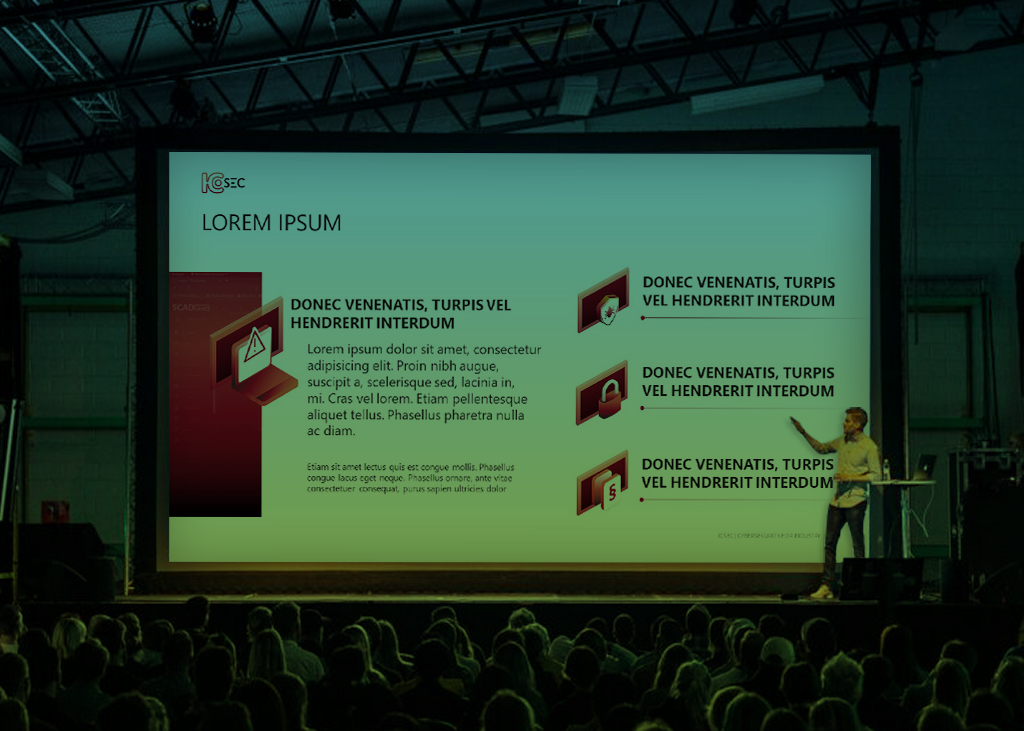
GOOD SCIENTIFIC PRESENTATION
How to create a good presentation? First and foremost, the duration matters. Scientific presentations, known from TEDx-style conferences, last a maximum of 20 minutes. Presentation art confirms that this is the ideal time to hold the viewer’s attention while thoroughly covering one specific topic. The scientific world often opts for hour-long or even multi-hour lectures, which, unfortunately, in today’s reality, are not an effective channel for communicating with viewers. Don’t drag it out. Even a longer lecture can be engaging, but beware – in good scientific presentations, lack of content always beats excess and boredom.
Second – graphics for the presentation
Your scientific presentation should complement your speech, not the other way around. Many PhD students forget this, filling slides with massive blocks of text and “reading slides.” Not a great graphic designer?
Don’t worry – you are not alone. Up to 45% of presenters, hosts, and lecturers struggle with creating graphics for presentations. Make sure each slide covers only one topic. Don’t forget charts and highlight the key statistics from your research. The number of characters or words per slide? As few as possible. Aim for zero. Let images, graphics, and words do the work – not text-heavy slides.
Third – use PowerPoint, Canva, or other presentation tools wisely. Each contains numerous functionalities and possibilities that no tutorials, online courses, or guides cover. We’ve already described PowerPoint tricks and presentation design principles that help achieve the “wow” effect on our blog.
Fourth – train and develop your public speaking skills. Use workshops, books, and podcasts. The more confident you feel on stage, the better multimedia presentations you will create – those that enhance and visually enrich your speech rather than act as meaningless background. Up to
PRESENTATION OF RESEARCH RESULTS
Why all this? In a scientific presentation, as in any public speech, effective communication is key. How does it work? Decide what you want to say and what message should stick in the audience’s memory. Based on that, select one main takeaway, message, or theme. Then design the presentation scenario and slide layout. Close the scientific talk with a conclusion – in this case, research results and the insights derived from them. Then it’s just a matter of delivering it. Simple? Not necessarily.
Of the 35 million presentations made daily, maybe only a few percent are truly good. We know this because for over a decade, we’ve prepared multimedia presentations for companies and scientific presentations for PhD students, professors, and researchers. We see the challenges clients face. The biggest challenge is usually choosing that one sentence – the main motto that must reach the audience. Once you know exactly what you want to convey, the rest goes “smoothly.” Easier said than done.
HOW TO CONCLUDE A SCIENTIFIC PRESENTATION?
The grand finale really matters. Your last sentence and last slide can either ruin the entire show or ensure your message stays in viewers’ minds. The value of your scientific materials can be recognized or forgotten in an instant. Everything depends on an inspiring and engaging presentation.
Summarize the entire presentation at the end, highlight the key conclusions, and close your speech with a short and striking statement. No slides saying “The End” or “Thank you” – that’s last decade’s standard. How to finish a scientific presentation? With impact and energy – not a whisper.
PRESENTATION ON A SCIENTIFIC CONFERENCE
Research has shown that 91% of presenters feel better and more confident when giving their speeches if their scientific presentation is really well prepared, has a well-thought-out script, and professional graphics. Would you like to be one of them? If so, write to us and together we will create a scientific presentation that will help you stand out from the crowd of speakers at a conference or seminar, effectively present your research results, and captivate the audience with your speech. Sounds like a plan?
 Previous